Best Non Slip Flooring Options: A Technical Reference on Traction and Safety
The technical discipline of slip resistance in residential and commercial architecture is often reduced to a binary of “textured” versus “smooth.” This oversimplification obscures a complex intersection of tribology—the science of interacting surfaces in relative motion—and ergonomic safety. Best Non Slip Flooring Options. In the modern interior environment, where moisture, oils, and particulate matter are constant variables, the floor plane is not merely a decorative surface but a critical safety interface. Selecting the appropriate material requires more than a cursory glance at a sample; it demands an analysis of how a surface maintains its “Coefficient of Friction” under various environmental loads.
As architectural trends favor open-concept layouts that bleed from wet zones into dry zones, the continuity of slip resistance has become a primary design constraint. The move toward “Curbless” showers and transitional outdoor-indoor spaces has removed the physical barriers that once compartmentalized safety risks. Consequently, the burden of injury prevention has shifted entirely to the material performance of the flooring itself. This shift has necessitated the development of more rigorous testing standards, moving away from static measurements to dynamic assessments that mimic the actual human gait on a wet surface.
Integrating high-traction surfaces into a sophisticated design scheme remains one of the more delicate balances for an architect or homeowner. Historically, “Non-Slip” was synonymous with abrasive, industrial-grade finishes that were difficult to clean and aesthetically harsh. However, innovations in material science—specifically in high-performance porcelain, modified vinyl, and textured natural stone—have allowed for the clandestine integration of safety. To evaluate the current landscape effectively, one must look past marketing nomenclature to understand the mechanical reality of how these surfaces interact with human footwear and skin.
Understanding “best non slip flooring options”
Navigating the best non slip flooring options requires a departure from subjective “touch-tests” toward an objective understanding of DCOF (Dynamic Coefficient of Friction). For a surface to be considered safe for level interior spaces expected to be walked upon when wet, it must typically achieve a DCOF rating of ≥0.42. However, this number is not a universal constant. A common misunderstanding is that a high DCOF rating in a laboratory setting guarantees safety in a kitchen environment. In reality, the “contaminant” (water, grease, or dust) creates a lubricating film that can effectively nullify the surface texture if the material’s “Micro-Roughness” is insufficient to break the surface tension.
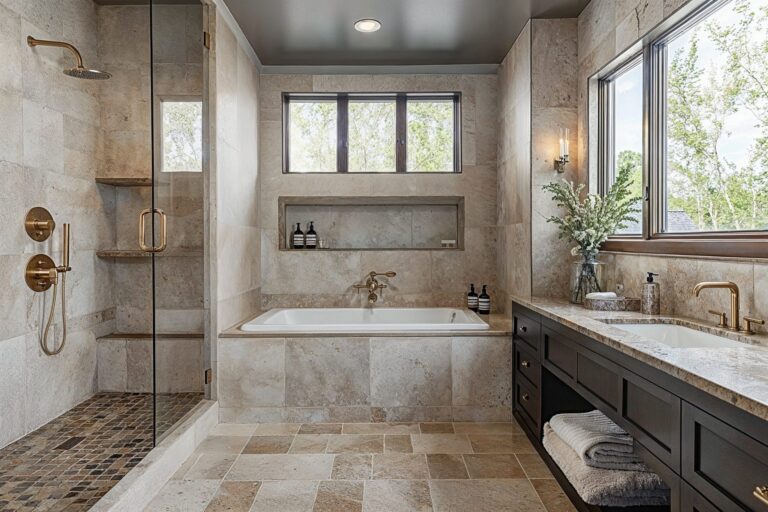
The risk of oversimplification often surfaces in the selection of natural materials. For instance, while unpolished slate is frequently cited as one of the best non slip flooring options, its performance is highly dependent on its “Clefting.” If the clefts are too deep, they create trip hazards; if they are too shallow or have been sealed with a high-gloss topical coating, the slip resistance vanishes. True safety is found in the “Interlocking Geometry” of the surface—where the material provides enough “peaks” to penetrate the lubricating layer of water while maintaining enough “valleys” to channel that water away from the contact point.
Furthermore, the “Best” options are increasingly defined by their “Cleanability-to-Traction Ratio.” An ultra-coarse surface may prevent slips, but if it traps bio-matter and becomes a breeding ground for bacteria, it fails the broader test of environmental safety. Modern high-performance porcelain tiles, for example, utilize a “Micro-Textured” glaze that feels smooth to the hand but provides intense mechanical grip when pressure is applied by a foot. Understanding these options involves a holistic view of the floor’s lifecycle, from initial installation to the inevitable degradation of the surface under foot traffic.
Deep Contextual Background: The Evolution of Surface Safety
The history of non-slip flooring is a transition from accidental friction to engineered traction. In pre-industrial architecture, safety was often a byproduct of material limitations—unfinished wood and hand-hewn stone naturally possessed high tactile resistance. As the 20th century introduced polished terrazzo, linoleum, and glazed ceramics, the aesthetic of “Cleanliness” became synonymous with “Smoothness,” inadvertently creating the modern slip-and-fall epidemic.
By the 1970s and 80s, the industrial sector responded with “Safety Floors” that used embedded silicon carbide or quartz crystals. These were effective but visually jarring and abrasive to the touch. The current era, often termed the “Refined Traction Era,” leverages digital printing and advanced firing techniques to create surfaces that mimic the visual depth of polished marble while retaining the mechanical grip of a safety floor. We no longer have to choose between the clinical safety of a hospital floor and the aesthetic of a luxury residence.
Conceptual Frameworks and Mental Models
When auditing a space for safety, professionals use these mental models to identify latent risks in the floor plan.
1. The “Hydroplaning” Threshold Model
This model evaluates the likelihood of a foot losing contact with the floor due to a liquid barrier. It prioritizes materials with “Displacement Volume”—space within the texture for liquid to move into when compressed.
2. The “Gait Transition” Framework
Slips rarely occur in the middle of a room; they happen during transitions (e.g., from a carpeted hallway to a tiled kitchen). This framework assesses the “Friction Differential” between adjacent surfaces. A sudden drop in friction is more dangerous than a consistently low-friction floor.
3. The Surface-to-Skin Adhesion Model
In bathrooms and pool decks, the interface is often bare skin rather than rubber soles. This model focuses on “Soft-Tissue Grip,” favoring materials that provide friction without causing “Abrasive Burn” or discomfort.
Key Categories of Slip-Resistant Variations
The marketplace for the best non slip flooring options is segmented by material chemistry and mechanical structure.
| Category | Primary Friction Mechanism | Best Use Case | Trade-off |
| Textured Porcelain | Micro-Engineered Glaze | Bathrooms / Kitchens | Hard underfoot; cold |
| Slip-Resistant Vinyl (LVP) | Embossed-in-Register (EIR) | Residential Living | Shorter lifespan than stone |
| Natural Cleft Slate | Geological Fissures | Entryways / Mudrooms | Requires regular sealing |
| Rubber Flooring | Molecular Adhesion | Gyms / Utility Rooms | Limited aesthetic range |
| Cork Flooring | Cellular Compressibility | Elderly Living / Spas | Susceptible to water damage |
| Quartz-Inlay Sheet | Abrasive Aggregates | Commercial / Clinical | Industrial aesthetic |
Realistic Decision Logic
If the priority is “Longevity and Hygiene” in a primary bath, Textured Porcelain with a DCOF of >0.60 is the undisputed leader. However, if the project is a “Multi-Generational Living” space where comfort and impact insulation are as important as traction, Cork or high-end EIR Vinyl provides a “Softer” safety profile.
Detailed Real-World Scenarios Best Non Slip Flooring Options
Scenario: The “Curbless” Master Suite
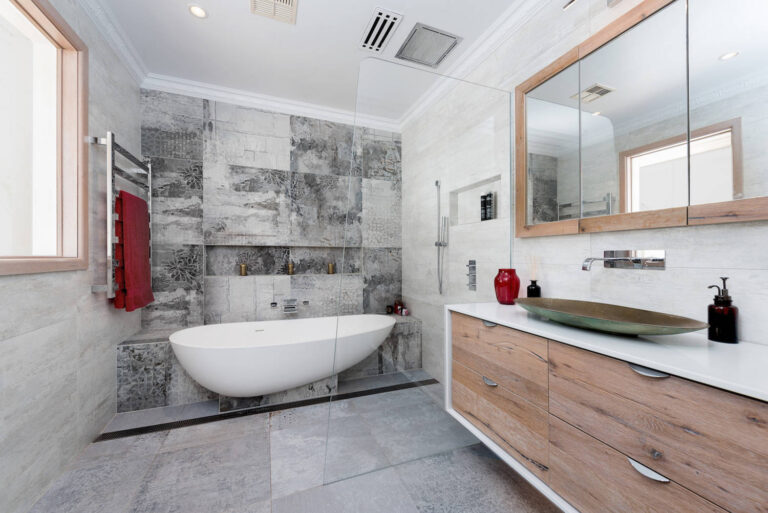
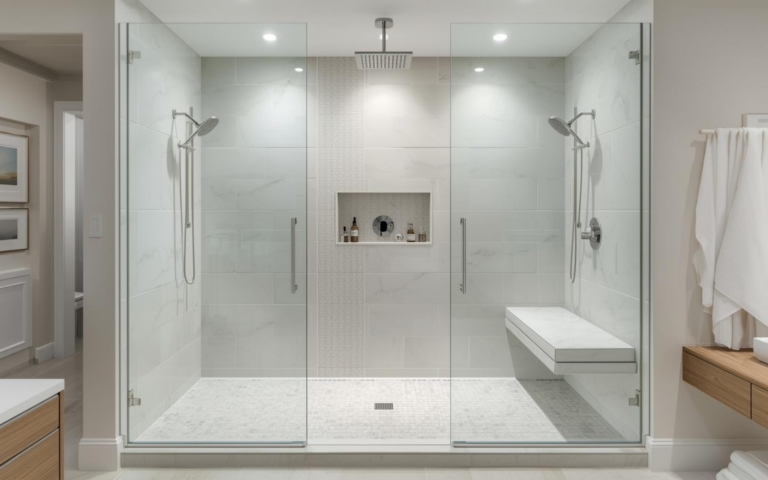
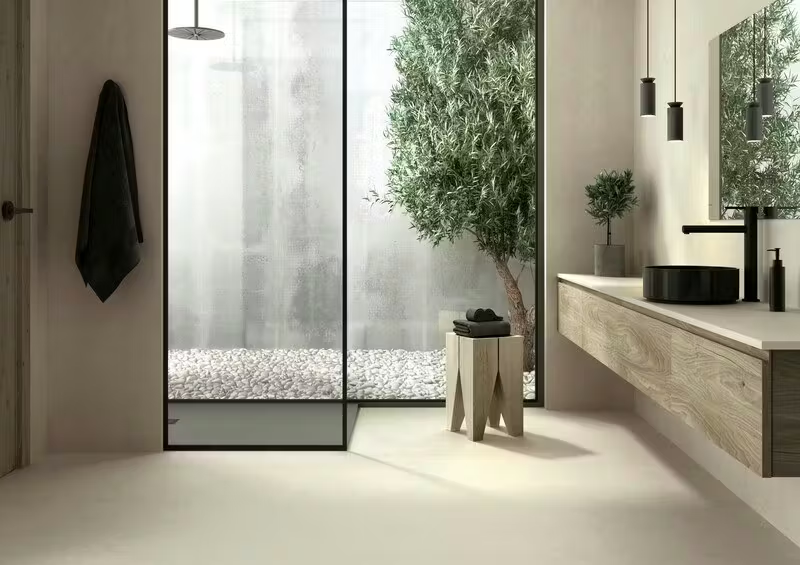
A luxury renovation where the bedroom carpet meets a large-format tile shower. The plan must eliminate the curb entirely. The technical challenge is the “Slope-to-Drain” combined with a wet surface. The solution involves a “Linear Drain” paired with “Mosaic” tiles (2×2 or smaller) in the shower zone. The increased frequency of grout lines in a mosaic provides “Passive Traction” that large slabs cannot match.
Scenario: The High-Traffic Commercial Kitchen
A environment where grease is the primary lubricant. Standard “Non-Slip” tiles fail here because grease fills the micro-texture. The plan requires “Quarry Tile” with an abrasive grain and “Deep-Grooved” profiles that allow grease to settle below the walking surface. The failure mode is using a standard mop, which simply spreads the grease; a “Deck Brush” and “Power Vacuum” system are required support tools.
Planning, Cost, and Resource Dynamics
The “Traction Premium” is usually found in the labor and the quality of the finish rather than the raw material.
-
Direct Costs: High-traction porcelain and LVP range from $4 to $12 per square foot. Natural stone can exceed $20.
-
Indirect Costs: The “Maintenance Surcharge.” Textured floors consume more cleaning solution and require more frequent brush-agitation than smooth floors.
-
Opportunity Cost: Choosing a cheaper, smoother tile may save $2,000 on the build but result in a $50,000 liability or medical cost following a single fall.
Capital Allocation for Safety Flooring
| Tier | Cost Range (Installed) | Materiality | Expected Performance |
| Budget Utility | $5 – $8 /sq.ft. | Standard LVP / Ceramic | Moderate; Residential only |
| Performance Residential | $10 – $15 /sq.ft. | Textured Porcelain / Cork | High; Wet-zone safe |
| Architectural / Commercial | $20+ /sq.ft. | Cleft Stone / Quartz Vinyl | Exceptional; Life-safety grade |
Tools, Strategies, and Support Systems
-
Digital Tribometers: The “Gold Standard” for testing DCOF on-site. Professional installers use these to verify that the floor meets the specified safety rating after it has been sealed.
-
Epoxy Grout Systems: In wet zones, standard grout can absorb moisture and become slippery. Epoxy grout is hydrophobic and maintains its structural grit.
-
Hydro-Absorbent Walk-off Mats: A critical “Support System” for entryways to remove the initial layer of moisture from shoes before they hit the hard floor.
-
Penetrating “Anti-Slip” Treatments: Chemical solutions that create microscopic “Suction Cups” on the surface of existing stone or tile without changing the look.
-
Microfiber Scrubbing Pads: Standard mops “jump” over the peaks of a textured floor; microfiber pads reach into the valleys to remove the lubricating biofilm.
-
Stair Nosing Profiles: Integrated metal or rubber strips that provide a “Mechanical Stop” on the edge of steps, where the risk of a slip is highest.
Risk Landscape: A Taxonomy of Traction Failure
-
The “Topical Sealer” Trap: Applying a high-gloss, “Wet-Look” sealer to a naturally non-slip stone. This fills the clefts and turns the floor into a skating rink.
-
The “Biofilm” Accumulation: In bathrooms, soap scum and skin oils build up over time. Even the best non slip flooring options will fail if a “Biofilm” is allowed to mask the surface texture.
-
The “Detergent Residue” Risk: Using too much soap when cleaning. When the floor dries, a thin, invisible layer of soap remains. The next time the floor gets wet, that soap re-activates, creating a high-lubricity surface.
Governance, Maintenance, and Long-Term Adaptation
A high-traction floor is a “Dynamic Asset” that requires an active management protocol:
-
Quarterly “Grip” Testing: A simple “Drag Test” with a rubber-soled shoe to identify areas where the texture may be wearing down or where residue is building up.
-
Annual Deep Agitation: Using a cylindrical brush scrubber to remove deeply embedded particulates from the material’s valleys.
-
Adjustment Trigger: If the floor starts to show a “Patina” or “Shine” in high-traffic paths (like the hallway or in front of the sink), it indicates that the micro-texture is being polished away by foot traffic and may require a chemical “Re-etching” or replacement.
Common Misconceptions and Technical Corrections
-
“Matte finish always means non-slip.” Correction: A matte finish can still be “Smooth” at a microscopic level. Always verify the DCOF rating regardless of the sheen.
-
“Grout lines make the floor harder to clean, so I should use larger tiles.” Correction: Grout lines are your best friend for traction. In a high-risk wet zone, smaller tiles (Mosaics) are significantly safer.
-
“Vinyl is slippery when wet.” Correction: Modern LVP with “Embossed-in-Register” textures can outperform many ceramic tiles in slip resistance.
-
“I can just use a non-slip rug.” Correction: The rug itself can become a trip hazard. A built-in non-slip floor is a permanent, integrated safety solution.
-
“Natural stone is the most non-slip.” Correction: Polished marble or granite is among the most dangerous surfaces when wet. Only “Honed,” “Flamed,” or “Cleft” finishes provide adequate safety.
Conclusion
Selecting the best non slip flooring options is an exercise in “Architectural Responsibility.” It is a commitment to the long-term well-being of the home’s or building’s occupants. By moving beyond the aesthetic allure of polished surfaces and embracing the technical necessity of DCOF-rated, micro-textured materials, designers can create spaces that are both visually stunning and functionally secure. A successful floor is one that provides “Quiet Confidence”—allowing the user to move freely without the cognitive load of navigating a potential hazard. Ultimately, the floor is the foundation of the interior experience; ensuring its stability is the first step in high-tier architectural stewardship.